Home / Applications

Geometry and surface, without contact

Materials characterization

Materials characterization

Materials characterization

Dimensional and surface measurements on specimens and components where contact could deform the part or disturb the result.

01 — The challenge

Example field

Small, delicate or reflective specimens are hard to measure with tactile probes. Optical measurement avoids contact but needs controlled illumination and constant magnification.

Small, delicate or reflective specimens are hard to measure with tactile probes. Optical measurement avoids contact but needs controlled illumination and constant magnification.

Small, delicate or reflective specimens are hard to measure with tactile probes. Optical measurement avoids contact but needs controlled illumination and constant magnification.

02 — Workflow

From sample to result

From sample to signed result

From sample to signed result

From sample to signed result

  1. 01

    Fixture

    The specimen is located repeatably with a fixture kit.

  2. 02

    Program

    A routine defines features, illumination and tolerances.

  3. 03

    Measure

    Edges are detected and distances, radii and angles computed.

  4. 04

    Report

    Results are compared with tolerances and stored with the image.

03 — What to consider

Questions to settle before you choose

Questions to settle before you choose

Questions to settle before you choose

Part size and mass Surface finish and transparency Required tolerance and environment

Typical instruments

LFM-80

LFM-80

Browse instruments
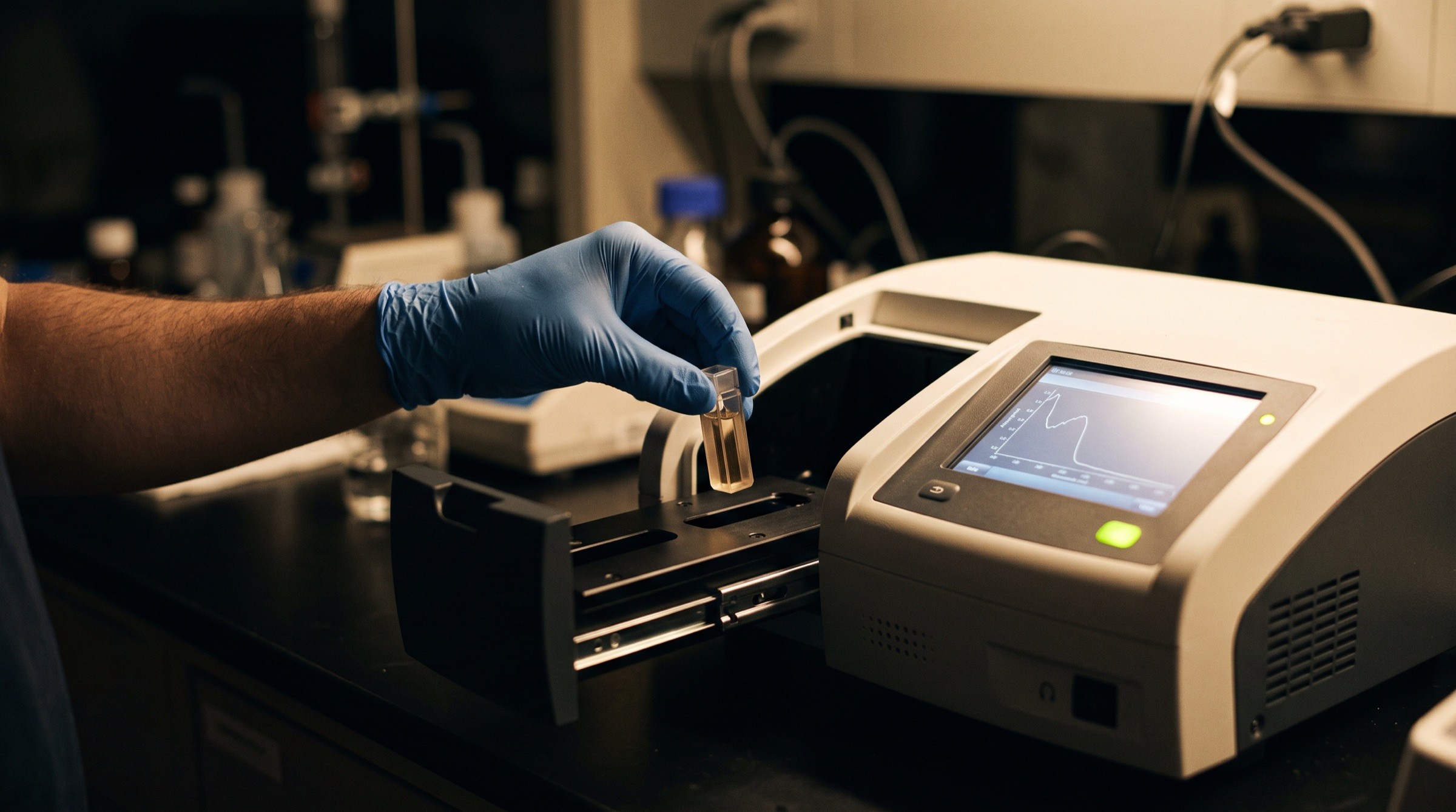
Gloved hand placing a cuvette into the sample drawer of an analyzer

Bring us your samples

Bring us your samples

Bring us your samples

Book a demonstration
Request a quote

A demonstration with your own samples is the fastest way to know whether an instrument fits your workflow.

Create a free website with Framer, the website builder loved by startups, designers and agencies.